Friday, January 29, 2010

Simple Evacuation Model in Netlogo

After talking with some colleagues about the problem I decided to construct a simple model that simulates how people in a city who are told to evacuate might make the decision to leave or stay. It is documented that many people either choose not to evacuate after being warned while many others simply can't because they lack the means (transportation, social network outside of their neighborhood, etc.).

The model is straight forward - a user specified number of agents are chosen to receive the evacuation notice. Every cell is randomly assigned a decision value that represents the likelihood that they'll actually leave. If that value is above some threshold, then the cell decides to evacuate (represented by green), otherwise they'll stay (red). The blue cells haven't heard one way or the other about the evacuation.


Next all the cells look at their neighbors and see if they've received the evacuation notice - if they haven't nothing changes. If their neighbors have made a decision it will affect the previous mentioned decision value either positively (if their neighbor is evacuating) or negatively (if their neighbor is staying put).

What we see is that there are random cells throughout the region that decide to stay - and also larger clusters (neighborhoods).


It is a very simple model - but I think it captures some of the dynamics of this process. Here is a link to the model: http://www.acsu.buffalo.edu/~mjwidene/evacmodel.nlogo (NOTE: Right click and save as - otherwise you'll get text. Also you need Netlogo to run the program).

And for those interested here is the code:

patches-own [aware? prob-evac evacuate? influence no!]

to setup
  ca
  ask patches[
    set aware? 0
    set pcolor blue
    set prob-evac random-normal .5 .3]
  repeat num-initial[
    ask one-of patches[
      set aware? 1
      set pcolor orange]]
  setup-initial-decision
end

to setup-initial-decision
  ask patches with [aware? = 1] [
    ifelse (prob-evac > .5)
      [set evacuate? 1
       set pcolor green]
      [set evacuate? 0
       set pcolor red]
      ]
end

to go
  display
  ask patches[
  if (prob-evac < .1)
    [set no! 1
     set pcolor red]
  look-at-neighbors
  make-decision
  ]
end

to look-at-neighbors
  set influence (count neighbors with [evacuate? = 1])
  if (no! = 0)[
  set prob-evac (prob-evac + .3 * (influence / 8))]


end

to make-decision
  ifelse (count neighbors with [evacuate? = 1] != 0)
    [ifelse (prob-evac > .5)
      [set evacuate? 1
       set pcolor green]
      [set evacuate? 0
       set pcolor red]]
    [if (prob-evac > 0.1)
      [set prob-evac (prob-evac - .1)]]

end

Friday, January 15, 2010

The Chicago "L" system


Whether we call it the "L" the "El" or just "the train," the rail-based transit system in Chicago is definitely one that we locals love and love to hate. Much like most other transit systems in Chicago, the El was designed in a manner to help provide rapid transit to the CBD of Chicago, better known as the Loop. The interstate highway system and the commuter rail system (Metra) are designed in a similar manner.


The L in Chicago remains a very affordable method of transversing many miles of urban Chicago, but the system is really only fast, functional and interconnected if your travel plans lead you to the Loop area. For a traveler who might live in Uptown (perhaps near the Wilson stop on the Red line) and work in Cicero (near the 54th/Cermak stop on the Pink line), travel times are extensive, connections to local buses are infrequent, and the L system becomes a burdensome method of travel.


There are often discussions of expansion of the fixed rail system in Chicago, but little has been done with local, state or federal funding to do much with these ideas. Plans become burdened by battles between wealthier suburban interest groups who prefer money be spent on commuter train expansion (Metra) and poorer, often minority, urban interest groups who would like to see El expansion, outer loop rail construction (connecting the spokes of the current CTA "L" system) and improvement of existing facilities


The battle has implications both for transportation options and for economic development opportunities. There are a plethora of sources that point to the benefits of Transit Oriented Development (TOD) and the benefits for the immediate communities or commercial districts. While the battle for funds begins with appropriations for engineering, planning and construction, the war continues with the longer term implications of economic benefits associated with rapid transit.


Plans for the expansion of the CTA "L" system can be found on the CTA website. Details for the expansion of the CTA Red line from 95th St to 130th St, the expansion of the Orange line from Midway Airport to Ford City Mall, the expansion of the Yellow line deeper into suburban Skokie and the elusive "Circle Line" are detailed on the site (more discussion of this plan will follow).

Subways

Or, Five. Five dollar. Five dollar sub-fare.


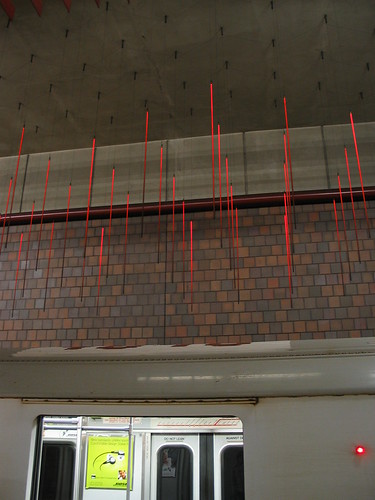
Over the past few weeks I made my way to Boston and Washington, D.C. and got to utilize their respective rail systems (the T and Metro) a good amount. I have to say that I found riding the T to be a much better experience (despite it being an older system) thanks mostly to the bustling and vibrant atmosphere underground. Where the T had vendors and art, the Metro had dark brown signs reminding you not to drink or eat and brutalist architecture.

Maybe this has to do with the system being located in the nation's capital (no tomfoolery allowed), but it all seemed a little excessive. Being underground in the D.C. stations left me thinking that adding a human touch could go a long way.

Then again, it got me where I needed to go relatively quickly and for only a few bucks.

Here is a site passed on to me by a friend that has some wonderful images from subway stations around the world. Maybe one day D.C. will renovate their system to make the underground experience a little less depressing!

http://www.designboom.com/weblog/cat/9/view/8346/subway-architecture.html


Look for future blogs on the impact increased ridership might have on current subway infrastructure and on the question of 'how hard is it to add new lines to current systems?' For the latter post, I'll look at how subway construction in Buffalo, NY killed a once vibrant part of the downtown.

I know my experiences on these systems (and most other large city subways) are limited - so if you know them better I'd be interested to hear your impressions.

Tuesday, January 5, 2010

Short intermission

Updates are coming soon! I'm presently in Boston - and will be back in Buffalo this weekend.

Tuesday, December 29, 2009

Adaptive Reuse: using what we've already got

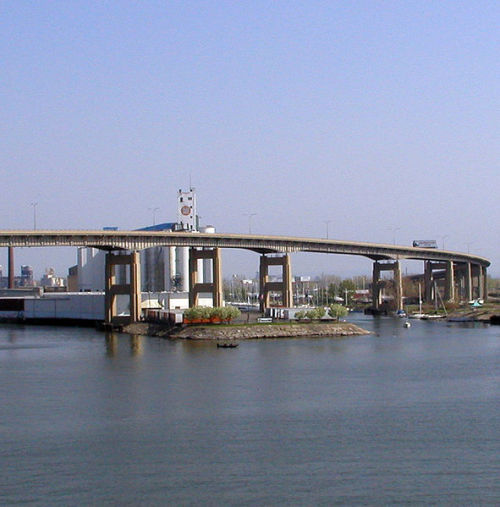
I came across a website the other day campaigning to "adaptively reuse" a portion of NY State Route 5 that passes over the Buffalo river, near downtown Buffalo. In addition to physically blocking access to lake Erie, the "Skyway" is dangerous to cross and expensive to maintain. Recently there has been a lot of talk of doing away with it all together. See this website (http://skywayalternatives.com/impact) for more on the Skyway and proposed alternative routes.

What I find interesting here is the idea that we don't necessarily have to destroy the "undesirable" structure but rather rethink how it can be used.

A video presentation of the proposed changes (author's note: who the hell thought it'd be a good idea to use a smooth-jazz instrumental version of a Coldplay song? Recommended volume setting: Mute) can be seen here:

http://www.ranwebber.com/Movie/skywaymovie.html

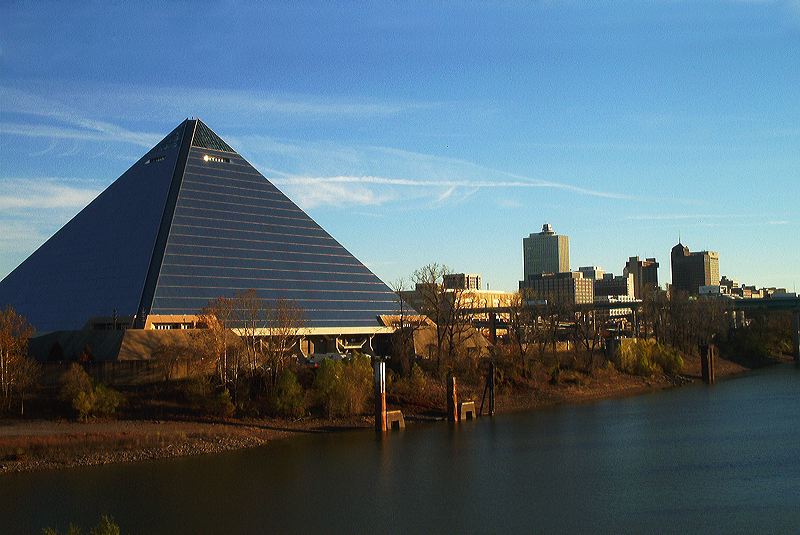
Ran Webber's proposal is ambitious but I think the basic idea is a good one, especially in cities with underutilized infrastructure. (Anybody know what's happening with the pyramid in Memphis these days?)

In the Skyway's case, if the structure is physically sound, what is the advantage of reducing it to rubble? By retrofitting it, you have a space for something (a market, urban farm, offices, indoor park, etc) as opposed to nothing. I think its reasonable to say that in cases where a new structure is proposed in the place of the old one, the economic and ecological impact should be considered and compared to adapting the old structure.


Maybe this ability to adaptively reuse old structures should be considered in urban change modeling. Something conceptually simple to think about is the function of buildings in a region and how they serve a local population. Structures that have fallen out of use could be potential locations for adaptive reuse or a replacement structure (based on economic/ecological costs). Of course an implementation would need to take into account a diverse and dynamic population with different perceptions of the region and other social factors - but this could be an important part of representing dynamic urban landscapes in long-term urban simulations.

As energy costs continue to increase, the utility of demolition is something to consider. If a structure is physically sound, then the total costs (including supply chain costs) of completely replacing it may not be feasible. I'd be interested in seeing a comparison of the environmental impact of demolition and replacement versus adaptive reuse.

Are there any neglected (but stable) structures in your city that could be adapted? When do you think adaptive reuse would be a good strategy? When might it not be? Is this just another form of gentrification?

Website on adaptive reuse: http://adaptivereuse.net/

Sunday, December 27, 2009

Welcome to The Urban Complex

Welcome to my new blog project: The Urban Complex.

Modern cities are dynamic places. Within them social and physical systems interact with each other at a breakneck pace, leaving its inhabitants with an experience truly unique to this era. As more and more people move to urban regions (more than 50% of the world's population live in cities) where poverty, segregation, and environmental degradation remain commonplace, social scientists are faced with two fairly simple questions -

"What processes influenced the form of current urban systems?"

and

"How can urban systems be (re)organized to better serve their inhabitants sustainably?"

While the questions are simple, the answers are obviously not. I hope that this blog will help further the discussion on urban issues in general and provide me and any readers with a better appreciation of how modeling urban regions as complex systems can complement qualitative understandings. My particular interests consist of four general themes:
  1. the use of agent-based models as a means for introducing an element of agency into quantitative models
  2. system dynamics modeling and systems thinking to understand the complex interrelations of human and non-human actors in cities
  3. cognitive mapping and its relation to mobility and access
  4. questioning why certain actions and structures are considered transgressive in urban regions and what that says about society.

Things this blog will include:
  • Reviews of different modeling techniques
  • Essays on cities by myself and anyone interested in contributing
  • Pictures of urban regions (anyone is welcome to submit)
  • Commentary on relevant current events
As a graduate student I believe I still have much to learn and welcome and encourage all comments and serious criticisms. I very much hope this project will become an open venue for people to post their thoughts (on anything from public transportation to graffiti to general complexity theory) and photos of cities, so please email me if you are interested in contributing!