I came across a
website the other day

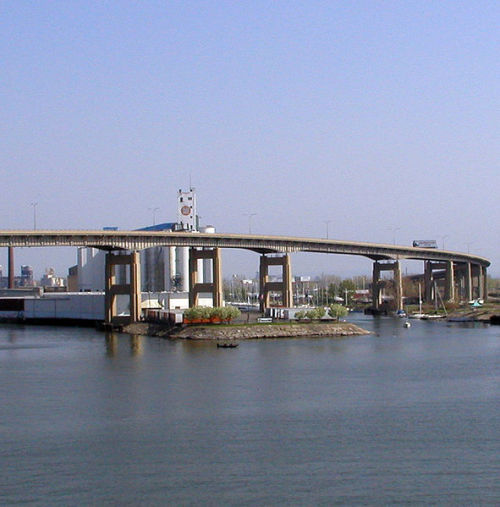
campaigning to "adaptively reuse" a portion of NY State Route 5 that passes over the Buffalo river, near downtown Buffalo. In addition to physically blocking access to lake Erie, the "Skyway" is dangerous to cross and expensive to maintain. Recently there has been a lot of talk of doing away with it all together. See this website (
http://skywayalternatives.com/impact) for more on the Skyway and proposed alternative routes.
What I find interesting here is the idea that we don't necessarily have to destroy the "undesirable" structure but rather rethink how it can be used.
A video presentation of the proposed changes (author's note: who the hell thought it'd be a good idea to use a smooth-jazz instrumental version of a Coldplay song? Recommended volume setting: Mute) can be seen here:
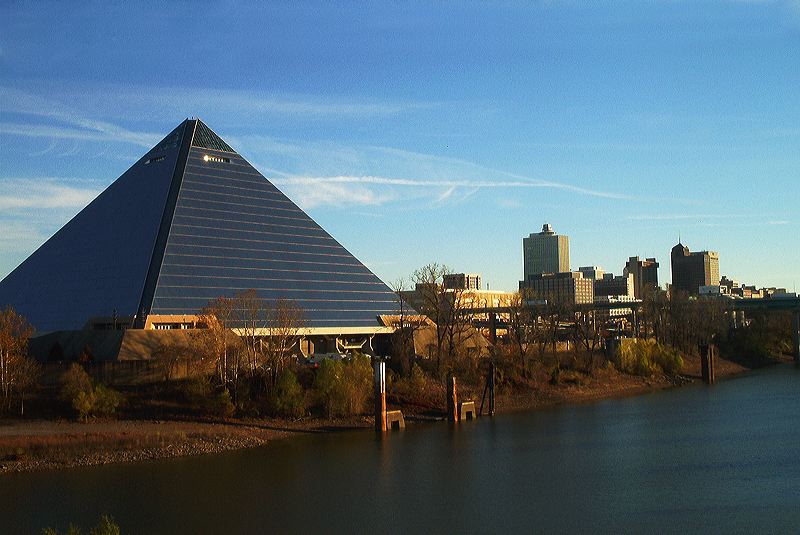
http://www.ranwebber.com/Movie/skywaymovie.htmlRan Webber's proposal is ambitious but I think the basic idea is a good one, especially in cities with underutilized infrastructure. (Anybody know what's happening with the pyramid in Memphis these days?)

In the Skyway's case, if the structure is physically sound, what is the advantage of reducing it to rubble? By retrofitting it, you have a space for something (a market, urban farm, offices, indoor park, etc) as opposed to nothing. I think its reasonable to say that in cases where a new structure is proposed in the place of the old one, the economic and ecological impact should be considered and compared to adapting the old structure.
Maybe this ability to adaptively reuse old structures should be considered in urban change modeling. Something conceptually simple to think about is the function of buildings in a region and how they serve a local population. Structures that have fallen out of use could be potential locations for adaptive reuse or a replacement structure (based on economic/ecological costs). Of course an implementation would need to take into account a diverse and dynamic population with different perceptions of the region and other social factors - but this could be an important part of representing dynamic urban landscapes in long-term urban simulations.

As energy costs continue to increase, the utility of demolition is something to consider. If a structure is physically sound, then the total costs (including supply chain costs) of completely replacing it may not be feasible. I'd be interested in seeing a comparison of the environmental impact of demolition and replacement versus adaptive reuse.
Are there any neglected (but stable) structures in your city that could be adapted? When do you think adaptive reuse would be a good strategy? When might it not be? Is this just another form of gentrification?
Website on adaptive reuse:
http://adaptivereuse.net/


 In order to evaluate larger transportation issues in the greater Toronto metropolitan area the group has spent a fair amount of time and energy on understanding broader social issues that invariably have significant effects on how and why people move and travel. However, because they have managed to create a microsimulation modeling environment that can handle, computationally, an urban area as large as Toronto, my impression is that some of the behavioral models have been greatly simplified (i.e. a marriage/divorce market). I'd like to learn more about how that, and other, behavioral factors are programmed - and perhaps it would be beneficial to look into developing a more complex behavioral model at a smaller scale (say, just a portion of the Toronto area).